
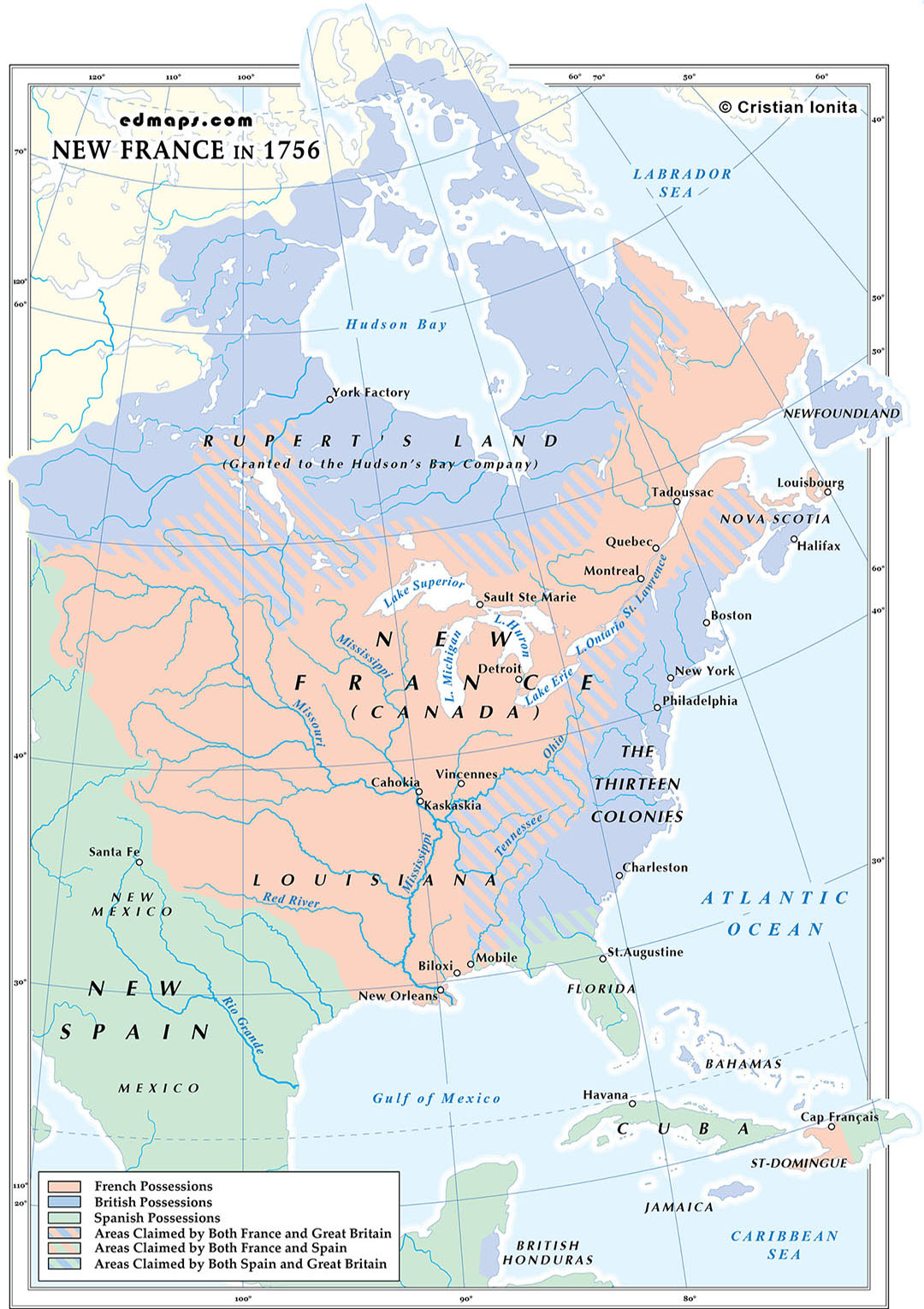
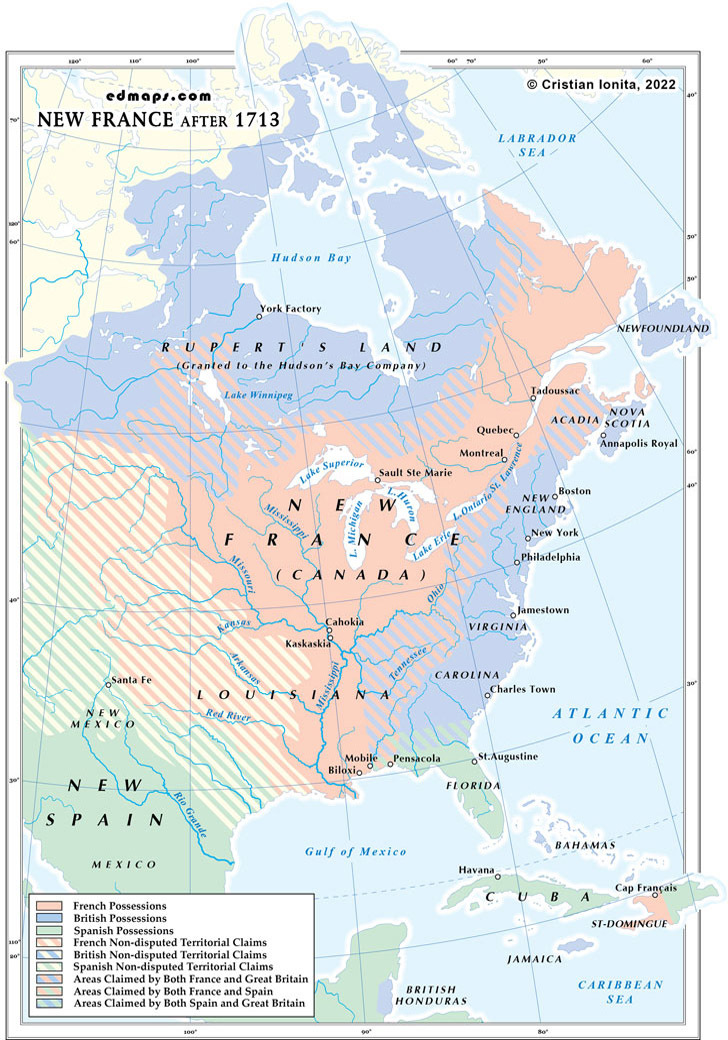
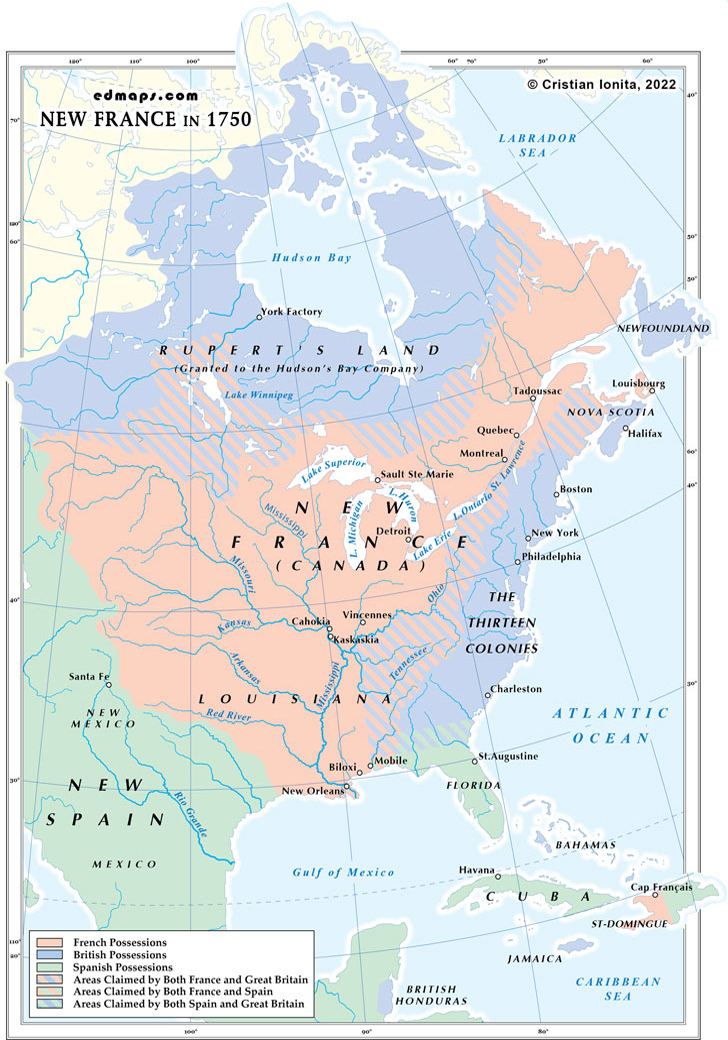
By 1756, the territorial tensions that had long simmered across North America erupted into open conflict. The formal declaration of war between Britain and France transformed a colonial rivalry into a global struggle, one that New France, already overstretched, was ill-equipped to survive.
The Ohio Valley, whose strategic importance had defined French policy for years, was already partially lost. Fort Duquesne held, but British general Braddock's defeated expedition of 1755 had been replaced by renewed imperial resolve. The frontier was now a theatre of coordinated military campaigns rather than trading-post skirmishes.
New France's response was audacious given its constraints. Under the Marquis de Montcalm, French forces struck aggressively at British positions along Lake Champlain and Lake Ontario (Fort Oswego fell in 1756 - n.b.) demonstrating that a numerically inferior colony could still project military power through interior lines of communication and disciplined Indigenous alliances.
Yet the structural fragilities had only deepened. The St. Lawrence lifeline, vulnerable to naval blockade, connected a population that remained at roughly 70,000, a fraction of the British colonial mass pressing from the south and east. Intendant Bigot's increasingly corrupt administration compounded the strain of wartime provisioning, eroding the colony's internal cohesion precisely when solidarity was most needed.
The Indigenous alliance network, indispensable to any French military strategy, was holding, but under unprecedented pressure. Nations across the Great Lakes and Ohio country were being forced to choose sides in a European war whose outcome would reshape their own sovereignty regardless of which empire prevailed.
New France entered 1756 with its garrison forts still linked, its flag still flying from Louisbourg to the Mississippi, but the empire it represented was fighting not to expand, but simply to endure.


Sources, Methodology & Educational Use: The maps presented on this page are original creations produced for edmaps.com by Dr. Cristian Ionita. Each map is based on verified historical data relating to the territorial evolution, administrative structures, and political history of Canada. The maps are designed according to established practices in historical cartography, including source analysis, period contextualization, and visual clarity. The collection is curated to support teaching, learning, and public understanding of Canadian history, and is intended for educational and non‑commercial use.
edmaps.com — Historical Cartography for Education
edmaps.com provides original maps and curated historical maps designed to support teaching, learning, and public understanding of territorial evolution and administrative history. The original maps are created by Cristian Ionita, and all curated maps are selected from public archives, historical collections, and private holdings, and are presented for educational and non‑commercial use.
© Cristian Ionita. All rights reserved.
Website: https://edmaps.com — Contact: info@edmaps.com
